New Forms of Art Change Traditional Forms Explore the Subconscious and Satirize Society

Surrealism fine art emerged in Europe in the 1920s as a form of artistic and cultural rebellion. Information technology rejected aesthetic expectations instead of using artistic expression as a style to attain greater self-agreement. This created a monumental shift for society and how it interacts with fine art. Today, Surrealism art remains one of the most recognizable styles in modern fine art history. This article outlines the history and ideology of Surrealist artists and their famous works of the period.
Surrealism Art: Dada Roots
Surrealism was born out of the Dada fine art movement which developed after World War I in Zurich, New York and Paris. Dadaism was a divergence from any precedent art forms or ideologies. It challenged traditional aesthetics, 'loftier art,' and beauty.
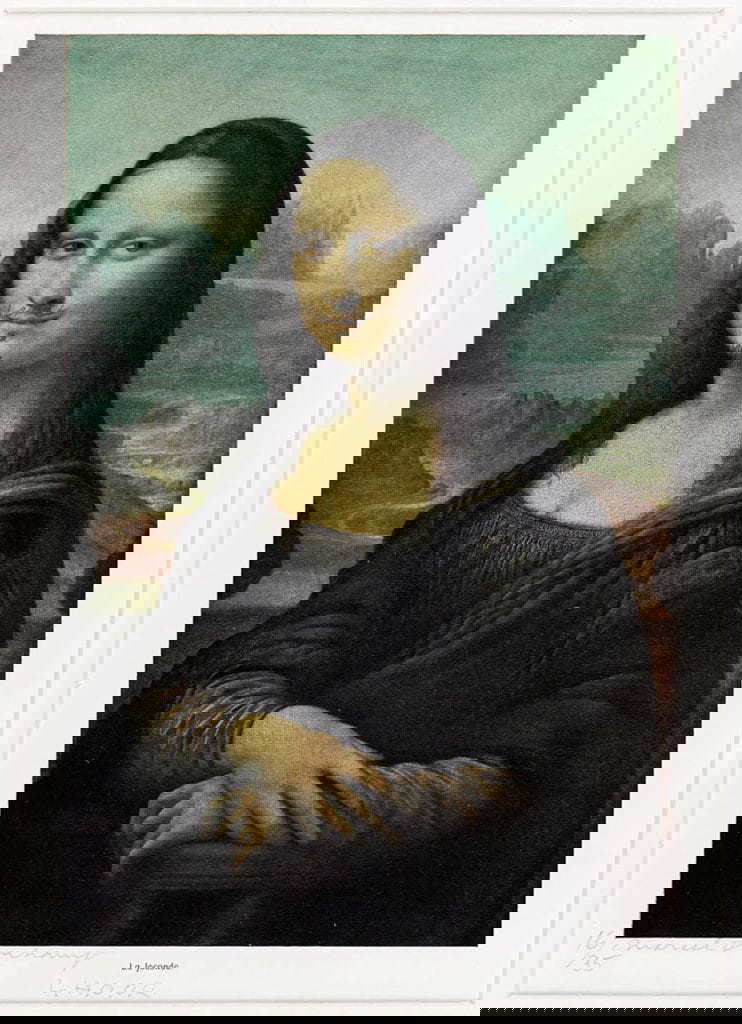
Dadaists utilized a variety of mediums and techniques in their art. They span from sounds to writing, sculpture, painting and collage. Their piece of work expressed disaffection with bourgeois culture, nationalism and war, which aligned them with the radical political far-left. They sought to elucidate the dark underbelly of capitalism through its dissolution of logic and rationale and the utilise of satire.
Surrealism, which originated in the 1920s in Paris, branched from the same school of thought equally Dadaism. Some Dadaists also took part in the Surrealist movement equally both were based on the rejection of Western values, reason and societal norms. However, Surrealism art was more focused than Dadaism. It was steeped in the psychoanalytic works of Sigmund Freud and centered on understanding the unconscious.
Freud and Psychoanalysis

Are you enjoying this article?
Sign up to our Free Weekly Newsletter
Please bank check your inbox to actuate your subscription
Give thanks you!
Surrealism derived pregnant inspiration from psychoanalysis, developed by Sigmund Freud to treat mental disorders. The set of theories and techniques were established to delve into the unconscious heed. Information technology aimed to illuminate the causes of aberrant and unhealthy mental habits. According to psychoanalysis, the listen is separated into the conscious and unconscious. Psychoanalytic handling aimed to bring the repressed desires and fears of the unconscious listen to the surface.
André Breton was introduced to Freudian psychoanalysis in 1916 while serving as a medical assist in a psychiatric center during World War I. He was intrigued by the delusional states of the patients who had come from the war front. When they returned, he tried to employ psychoanalytic theory to empathise their weather. He developed automatic writing during this time, which would after expand into one of the founding disciplines of Surrealism art.

Breton met Freud for the first time in 1921 and became the founder of Surrealism in 1924. In his outset Surrealist Manifesto, Breton cited psychoanalysis equally a gateway to restoring one's artistic identity, liberated from conformity and social normality. He asserted that the application of psychoanalytic idea and automatism in fine art would make someone a true Surrealist artist.
Surrealism Art: The Surrealist Manifestos
Andre Breton wroteThe Surrealist Manifesto in 1924. With clear allusions to the Dadaism move, of which Breton was also a member, the manifesto laid out the origins and purpose of Surrealism. It also summarizes a variety of applications of Surrealism in different creative mediums.

The manifesto asserted Surrealism as not only an artistic and literary movement but also a cultural epiphany that could exist applied to many unlike aspects of life. At its forefront was the exploration of the imagination and how it uncovered the desires of the unconscious mind. Breton also emphasized the importance of dreams and how they provided valuable insight into the unconscious. He became an important source of inspiration for Surrealist artists. The book finishes by reaffirming that the movement was based in nonconformism and straying from convention.
Automatism and the Unconscious
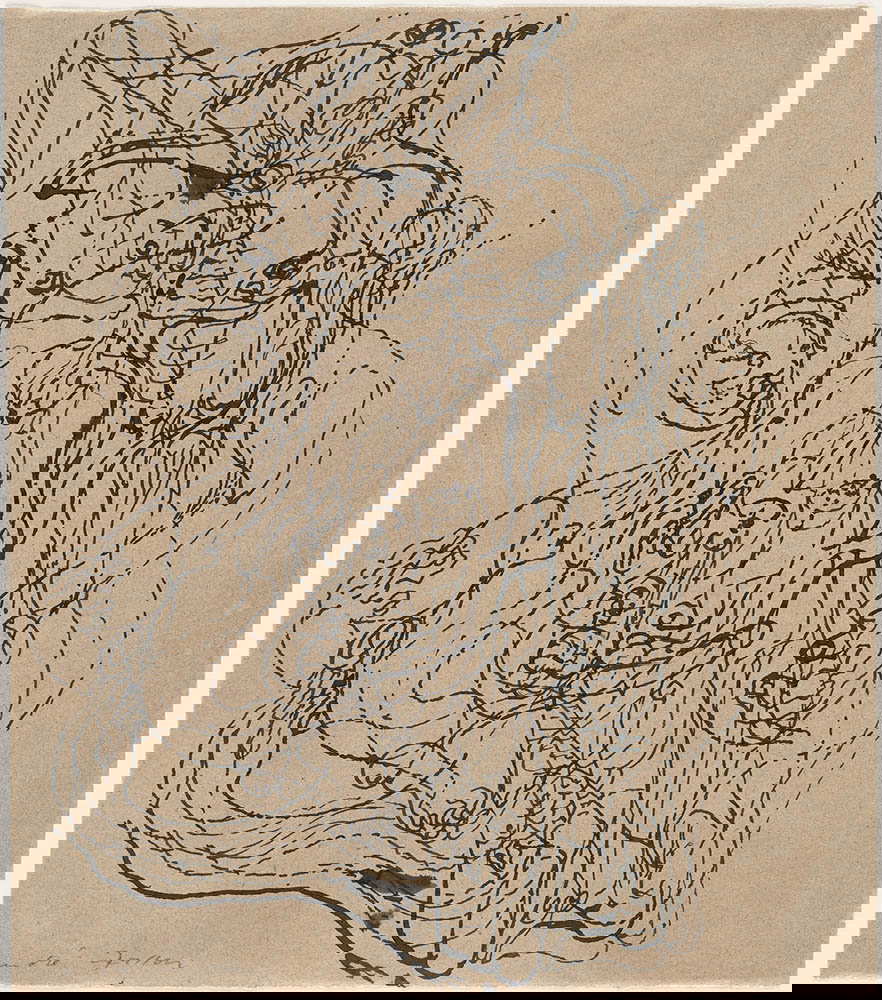
Breton describes Surrealism as a class of automatism , which "in its pure state, by which i proposes to express…verbally, by means of the written discussion, or in whatever other manner…the actual functioning of thought…in the absence of any command exercised past reason and exempt from any aesthetic or moral business." This method utilized free association in art and writing. It encourages the artist to suppress their conscious mind and rather permit the unconscious mind guide them. This improvisational technique was notably practiced past artists such equally André Masson, Joan Miró and Salvador Dalí. Despite the motion'due south significant expansion into different mediums and styles, Surrealism was firmly rooted in automatism.
The Parisian Group

While Surrealism spread throughout Europe and into Latin America, the most well-known bunco of artists formed in Paris during the 1920s. This collaborative grouping formed through a network of modernists who met in cafes and experimented with hypnotism and unconscious creativity. The Paris Surrealist group included André Breton, Max Ernst, Marcel Duchamp, Joan Miró, Salvador Dalí, André Masson and René Magritte amid others.
Surrealism Art: Painting
Painting was perhaps the most recognizable medium from the Surrealism art movement. Unrestricted past the bounds of reality, Surrealist painters were able to create a plethora of images in settings ranging from intense dreamscapes to mundane everyday life. Paintings frequently featured disjointed elements or iconography in an endeavor to diverge from the realm of reality. Artists also played with perspective, colour and depth to create a disorienting effect.
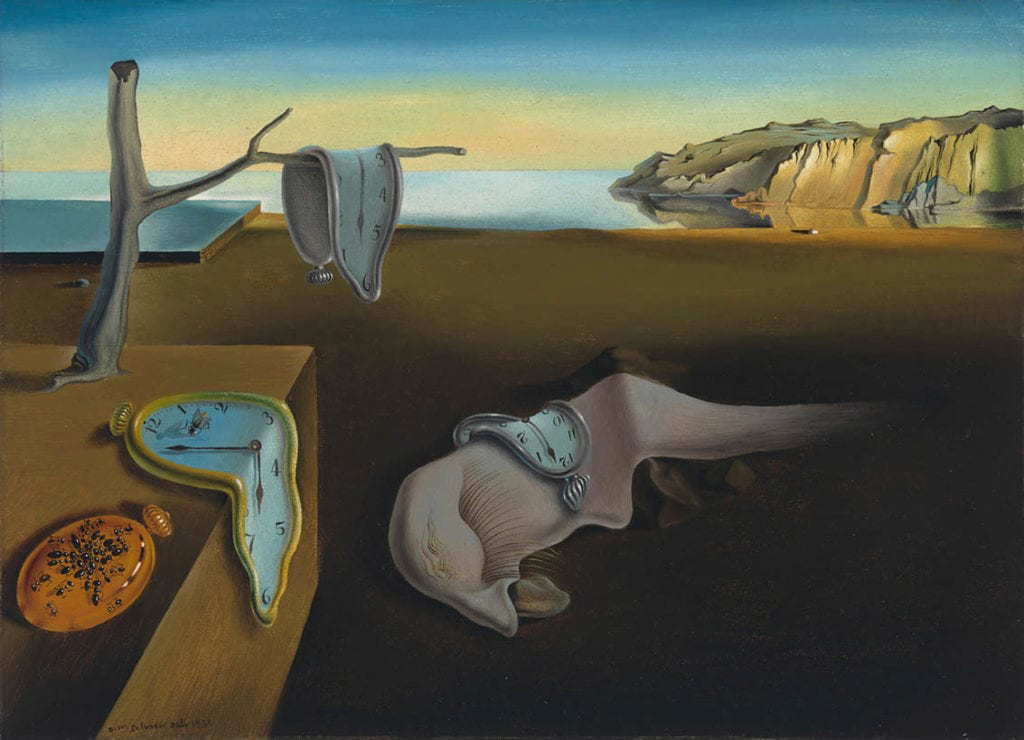
Two singled-out painting styles defined the period, although they were sometimes used in conjunction. 1 of these utilized a hyper-realistic, three-dimensional style with bizarre and contradictory imagery, portraying often fantastical landscapes in vivid detail. Artists such as Salvador Dalí and René Magritte famously used this mode, creating several infamous motifs including the melting clocks, a tobacco pipe and obscured faces.
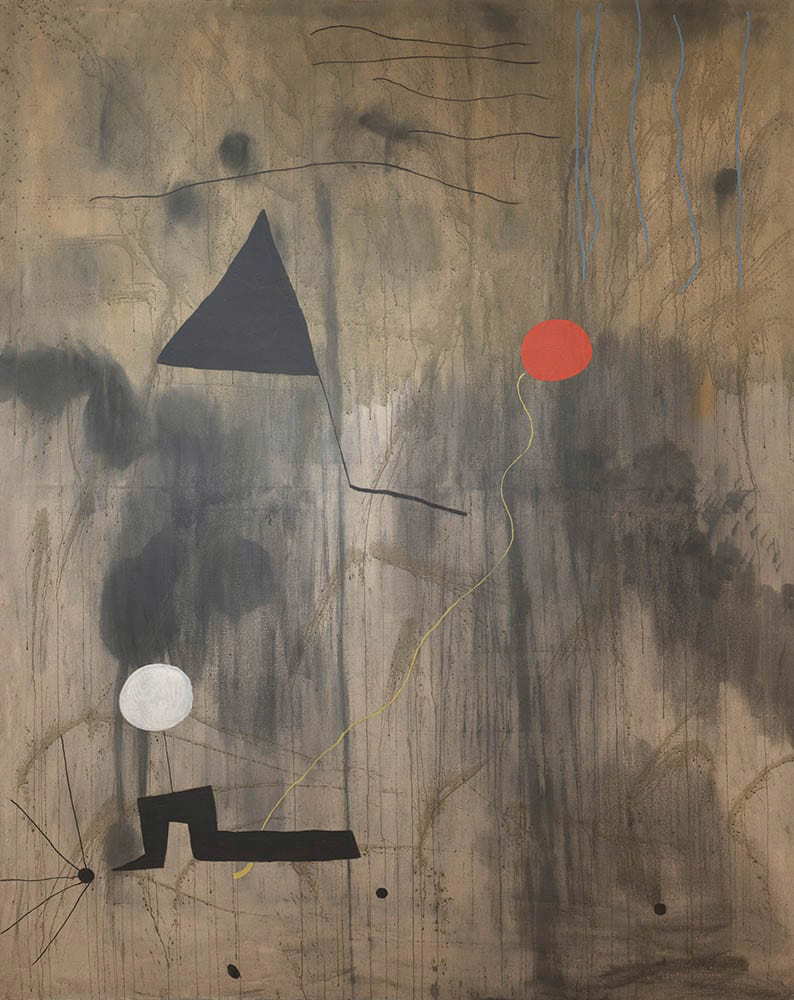
The other technique that characterized Surrealist painting was more than abstruse. This style focused on automatism and featured nonsensical, oft unrecognizable imagery. It too sometimes included elements from other mediums including drawing and collage. Artists including Max Ernst and Joan Miró produced work using this technique, often including doodling or external elements in their pieces.
Surrealist Artists in Sculpture
Surrealist sculpture notably abandoned traditional sculptural figures. Sculptors removed objects or forms from their original context and added unexpected or juxtaposing elements to them. They also often used nontraditional artistic materials, challenging previous notions of what 'sculpture' meant.

There were 2 chief types of Surrealist sculpture: biomorphic and objet trouvé . Biomorphic sculpture consisted of simplistic abstract forms. While non literal representations, biomorphic sculptures resembled recognizable shapes. This technique was considered a form of automatism considering it featured a replication of organic forms in an abstracted context. Artists including Joan Miró, Henry Moore and Jean Arp were known for their use of biomorphic sculpture.
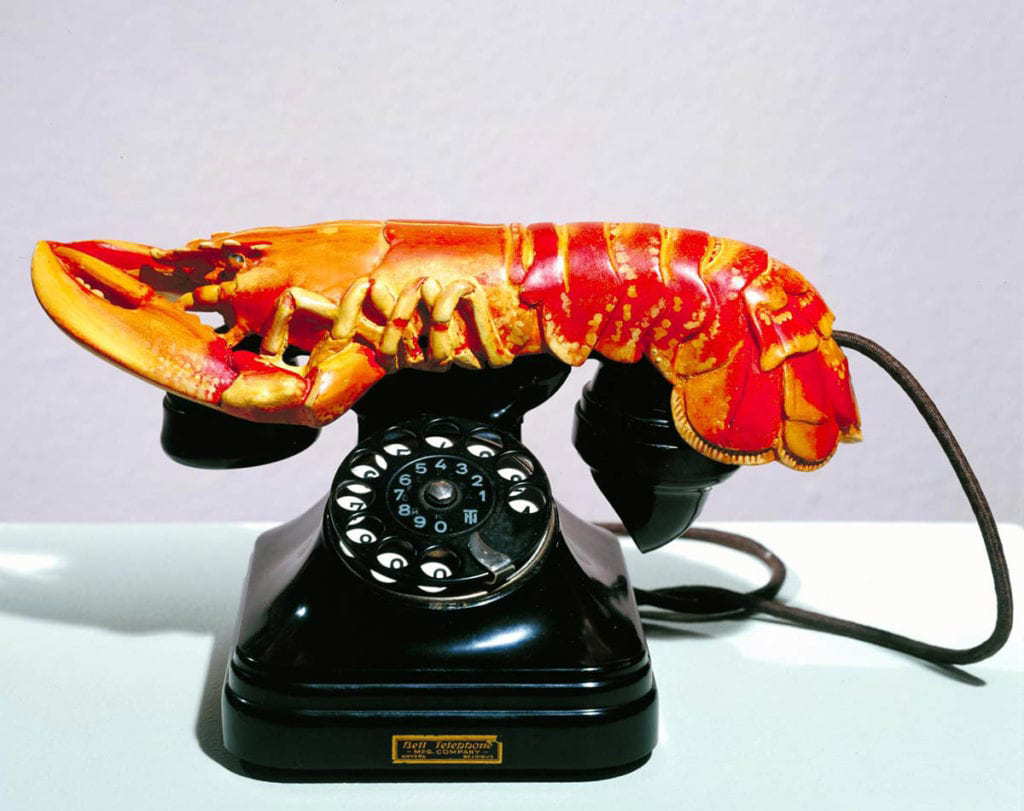
Objet trouvé, meaning 'found object', focused on the combination of unexpected or even seemingly random objects. This technique was also a course of automatism as it consisted of unconscious object association without a decisive strategy. In that location was oftentimes a satirical element to objet trouvé sculptures, as the objects used were considered 'low brow'. Artists including Marcel Duchamp, Pablo Picasso and others pioneered this style of sculpture during the Dada and Surrealism movements.
Surrealist Photography
The power to evoke dream-like scenarios in photography became fundamental to Surrealism. Photograph effects such every bit double exposure, blurring and baloney helped create images that were evocative, hallucinatory, and sometimes upsetting. The purpose of these effects was to create an epitome alienated from reality as if it was a window into some other dimension.

Surrealist photography too included the capturing of unusual or shocking subject matter. This blazon of photography ofttimes included portraits with exaggerated features, bizarre landscapes, or contradictory still lifes. All of these were continued by disjointed or out-of-place elements. Man Ray, Lee Miller, Claude Cahun and other Surrealist photographers all utilized both photo effects and unusual subject affair to create jarring images.
Surrealist Artists in Film
Surrealist films, different their cinematic predecessors, did not rely on linear or traditional storytelling. Rather, they focused more than on mental exploration, featuring abrupt and often disorienting narrative shifts and setting changes as if part of a stream of consciousness. They too featured shocking imagery in an attempt to cause a visceral audition reaction.

Films were too ofttimes motivated past sexual longing and instinctive inclinations to elucidate the desires of the unconscious mind. Breton called this amour fou, or 'insane beloved'. The element of amour fou demanded that the viewers employ film as a vehicle to confront their own underlying desires. Prominent Surrealist filmmakers included Jean Cocteau, Luis Buñuel and Germaine Dulac.
Legacy of Surrealism Art
Surrealism has had a monumental touch on modernistic and postmodern culture and remains present in art, film and literature. The Popular-Surrealism or 'lowbrow' motion developed in the 1970s, combining surrealist artist elements with images from popular civilization to create satirical, often shocking and sometimes agonizing imagery.
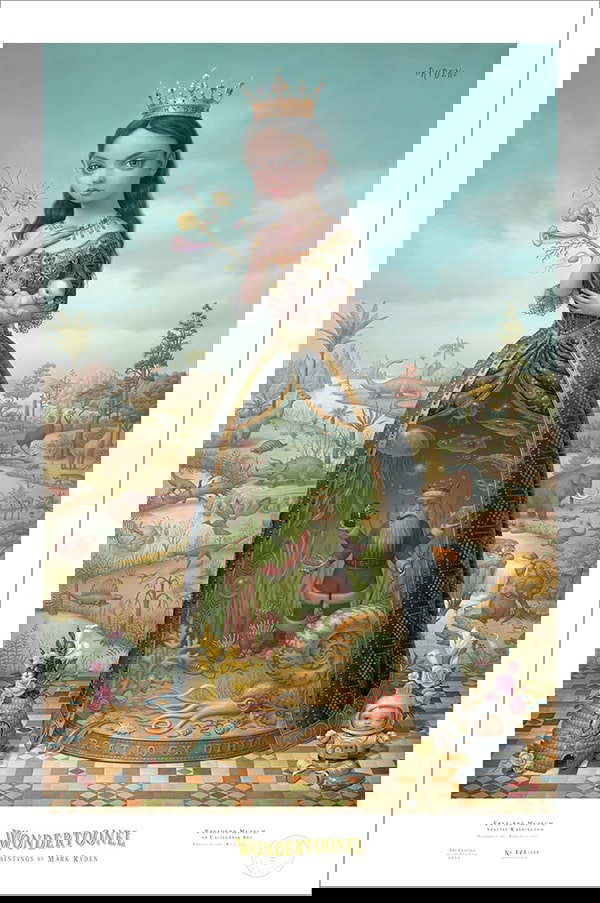
While at that place is some argue almost the stop of the Surrealist menses, there are numerous references to Surrealist fine art and in modern tv, film and literature. Easily recognizable motifs seen in work past artists such as Salvador Dalí, René Magritte and Frida Kahlo permeate modern media.
Cinema and photography also go on to utilize Surrealist elements and techniques. Advancing photo manipulation technology allows for the creation of the disconcerting imagery characteristic of Surrealist photography. Filmmakers such as Tim Burton have as well created entire bodies of work centered on dreamlike, fantastical scenarios that recollect Surrealist moving picture making.
Source: https://www.thecollector.com/surrealism-art-movement/
0 Response to "New Forms of Art Change Traditional Forms Explore the Subconscious and Satirize Society"
Post a Comment